A crucial part of any project is gaining buy-in from stakeholders, and in a recent surgical-suite project, skepticism from doctors was the major hurdle. I needed a tool that could speak their language, which is evidence.
Through discrete event simulation, I showed how a modeling approach could accurately reflect the complex processes inside their surgical suites. That transparency won their confidence.
The challenge: moving beyond averages
The hospital was planning to move into a new building, so the doctors needed to design the new facility to minimize patient flow wait times. I quickly found that traditional system modeling methods were inadequate for the task.
Simple flowcharts and spreadsheets could not handle the variability of a surgical center’s operations. Static tools failed because they relied on averages.
A complex and variable system
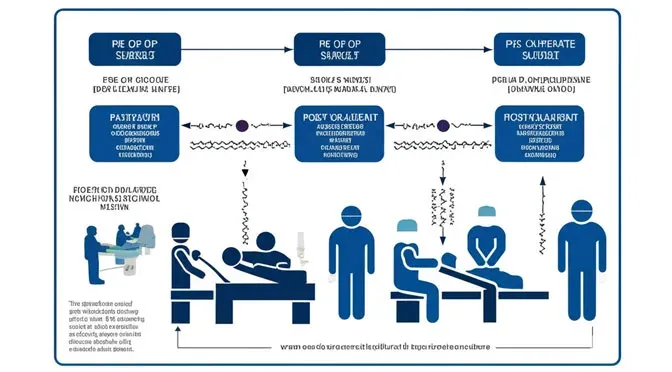
When I am asked to improve a system, my first step is to create a digital twin that exposes where the process can be improved. The hospital’s surgical operations presented several challenges that only discrete event simulation could handle:
- Variable process times. Pre-op, surgery, post-op, and cleaning times varied significantly. Averages would not accurately predict the system’s behavior.
- Shared resources. The pre-op and post-op areas occupied the same rooms, so a patient could not enter pre-op until a post-op patient had been discharged and the room cleaned.
- Limited cleaning staff. All rooms shared the same cleaning resources, which created a bottleneck whenever several rooms became available at once.
These factors made a simple flowchart insufficient. The interdependencies were too complex for static methods.
The discrete event simulation advantage
To work through these challenges, I turned to ProcessModel. The model was a straightforward six-step process, yet the power of discrete event simulation was in its ability to account for the variability that traditional models miss.
Instead of averages, I used distributions for patient arrivals, pre-op times, surgery times, and cleaning times. The software let me enter these variables and define a target, in this case reduced patient waiting time.
A note on modern modeling: with the new ProcessModel, building these models is faster than ever. Describe your process to your own AI app and, through PM AI Bridge, it can build the simulation structure on the canvas for you.
Validating the solution
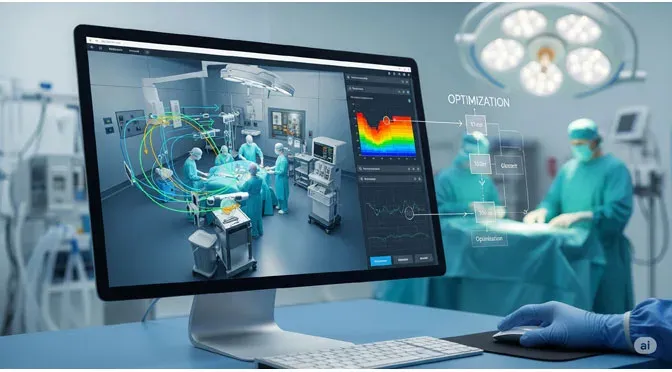
The software ran a series of simulations, optimizing the process to meet the target. This automated optimization produced a data-driven solution and an objective way to validate the proposed changes.
I could even run the simulation at a slow speed to visually confirm that the model’s behavior was accurate. The doctors could watch their patients move through the virtual clinic, which validated the logic instantly.
Conclusion
This project is a powerful example of how discrete event simulation tackles complex operational challenges in healthcare. A clear, verifiable model lets you overcome skepticism, and simulation gives you a robust foundation for effective process improvement. For a related walkthrough, see how to reduce emergency room waiting time using process simulation, and explore plans and pricing when you are ready to build your own model.