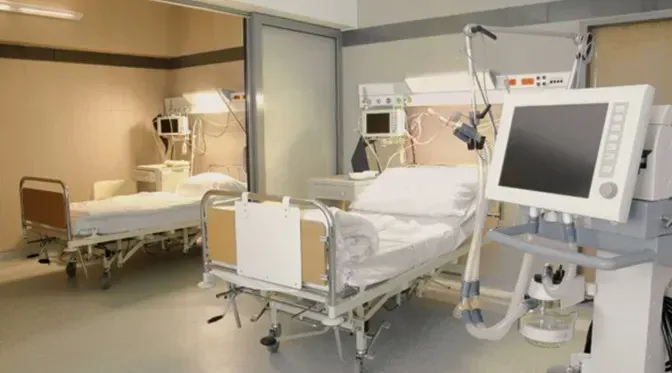


During a severe pandemic, saving children’s lives means making difficult decisions. Instead of treating patients first come, first served, medical staff must triage them, granting access to critical beds and resources according to defined criteria.
But what are those criteria?
Strategies have always existed, but no one had proven their value, until now. Alexander Kolker published a peer-reviewed article in Critical Care Medicine showing how to increase survival by almost 25% in a severe pandemic using healthcare process simulation.
Understanding triage and constraints
Triage assigns degrees of urgency to illnesses so doctors can decide the order of treatment when casualties are many. Boiled down, it means some patients receive access to resources while others are turned away, so that the largest possible number of children survive. It means applying specific criteria that give doctors a clear path to the best outcome.
During a severe pandemic, the system overloads quickly. Every admission limits other admissions. If hospitals do not plan these decisions ahead of time, they will treat patients who might have become casualties anyway while failing to treat the ones they could have saved.
The role of simulation in policy
The Centers for Disease Control (CDC) has endorsed the idea of triage allocation, but it does not recommend any particular algorithm, which leaves every hospital to operate on its own. This study is the first time a specific triage scheme was designed using healthcare process simulation to find the best outcome for saving children’s lives.
Optimization finds the best way to save lives
The study used ProcessModel to manipulate critical thresholds and optimize outcomes. The team first built an objective function for the model. Then, using built-in evolutionary algorithms, the software changed the model’s thresholds automatically to generate a range of solutions.
Each solution had to improve on the objective function to stay in contention. The software kept the best one once no further improvement was possible. As a result, the simulation only had to run a small subset of thousands of possible solutions to find the optimal thresholds.
Factors considered in the model
The simulation accounted for several complex factors:
- Size of the pandemic
- Pattern of patient arrival
- Probability of death if treated versus untreated
- Days of ventilation needed
- Beds available
While this study required a complex data setup, modern tools make that work easier. A researcher’s own AI app can build an initial model structure on the canvas through PM AI Bridge, leaving more time for the analysis that actually saves lives.
The impact of the study
The study analyzed close to 1 million historical patient records covering respiratory conditions to derive the algorithms. Experts from healthcare, statistics, and public health all took part. The results are striking and hard to ignore: a 25% improvement in saving children’s lives during a severe pandemic.
A tribute to innovation
Alex Kolker has published many other groundbreaking articles on patient flow, including:
- Predictive analytics for patient length of stay
- Optimal staffing modeling with variable patient demand
- Interdependency of hospital departments
ProcessModel, Inc. is particularly indebted to Alex Kolker for his tireless work. His application of healthcare process simulation maximizes survival rates and offers a blueprint for saving children’s lives. To see how the same modeling and optimization apply to everyday care settings, read how to reduce emergency room waiting time using process simulation.