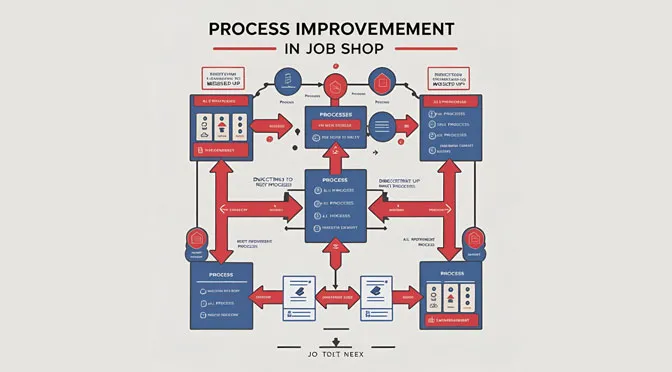



Long wait times in the emergency room are a major burden on patients and on the healthcare system alike. To address this, process improvement simulations can play a decisive role in transforming how the department works.
By examining process flow, the critical components, and the bottlenecks, health systems can identify design changes that reduce patient wait time, including better capacity planning, expanded access to clinicians, and more efficient use of resources. Simulations also provide guidance for operational decisions and for investments in new equipment to increase throughput and patient satisfaction. In short, a process simulation is a powerful way to tackle long emergency room waits by pointing to the design changes that matter.
Process simulation as a possible solution
Process simulation is a powerful tool for process improvement. By allowing transformation through simulation, process owners can identify inefficiencies and strengths faster than ever. With simulation, you build a model of your process that includes multiple scenarios, so you can view the potential outcomes of each one on the spot. That gives process owners a holistic view of the change, producing results and improving processes that were often too costly or difficult to address without simulation software.
How process simulation works
Process simulation is essential for process improvement. It uses computer software to build and analyze a model of the process, so you can see the effect of a specific change in a simulated environment before you roll it out for real. The results provide accurate estimates of expected performance, uncover opportunities to improve, and remove the need for costly real-world experimentation. The insights can improve productivity, quality, costs, and patient satisfaction.
Example
A process simulation study at a local emergency room recently produced impressive results. By simulating realistic scenarios, the improvements the team implemented led to significant reductions in waiting time. By identifying the bottlenecks, they were able to optimize workflow efficiency while making sure clinicians could keep providing high-quality care. The approach proved to be an effective way to design reforms, and it shows the potential of simulation as a tool for optimizing how a department runs. For a closely related view of flow problems, see job shop bottleneck analysis.
Implementing process simulation in your own hospital or care facility
Bringing process simulation into a hospital or care facility is a great way to improve efficiency and performance. With simulation, you gain an in-depth understanding of the current state and a path toward improvement. A good place to start is the processes most likely to benefit from change. Once you have identified them, build simulations that model different variations and test the impact of each change. This is essential for making sure a change is effective and accurate before it is made in real life. Finally, keep learning and keep refining your improvements as technology advances across the industry, which drives greater efficiency within processes that already work.
Emergency room wait times are a frustrating and common problem for patients across the globe, and process simulation has been shown to be an effective way to reduce them and improve patient satisfaction. If you would like to try process simulation in your own hospital or care facility, start a free trial and see how ProcessModel can help you solve the problem of long emergency room waits.