

Last year roughly 70% of all business process transformations failed, and most process improvement projects fared little better. The usual suspects get the blame: weak buy-in from stakeholders, and inadequate planning and execution. Those are real, but they are not the whole story. One vital and often overlooked factor is a thorough understanding of the current process. To transform a process successfully, you have to fully understand how it works today, including all of its nuances and quirks. That understanding is what makes it possible to identify the right areas to improve and develop solutions that actually hold up.
What follows are the failure points we see most often, and the single approach that addresses all of them: building a digital twin of the process.
Use a digital twin to understand the current process and test new ones
A digital twin is invaluable for any organization looking to transform its processes. By creating a virtual representation of the current process and using simulation to test and refine the new one, you gain a far deeper understanding of how things work today and can spot problems before you implement a single change. That alone raises the odds of success and saves time, money, and resources.
To build a digital twin, you gather data on the current process: the steps, the inputs and outputs, and key metrics such as throughput and cycle time. That data becomes the foundation of a virtual model you can manipulate and test freely. With it, you can run different scenarios and see how the new process would perform under different conditions, exposing bottlenecks and other issues that would otherwise surface only after go-live. The twin also reveals how the new approach performs, which opens the door to further optimization and refinement.
The payoff is risk reduction. By finding the problems and making adjustments before implementation, you avoid the unforeseen failures that sink so many projects. A digital twin saves time, money, and resources, and it raises the likelihood that the project succeeds.
Failing to look at the process as a whole
When a problem turns up in a system, the natural response is to fix that one problem and change nothing else. That is exactly where projects go wrong, because you have no way of knowing how the change will affect the rest of the system.

Changing one part of a process can affect others in ways that are not immediately obvious, creating delays or inefficiencies elsewhere. A narrow focus on a single defect can also hide the other issues that contribute to the problem. The fix is a holistic approach: consider every part of the process, find the root cause rather than treating symptoms, and look for changes that benefit the whole system instead of one corner of it. That can take more time and resources up front, but it saves both in the long run by preventing unintended consequences. A digital twin is what makes the holistic view practical, because it lets you watch a change ripple through the entire system before you commit to it.
Drowning in information
The problem is rarely a shortage of data. It is that understanding a process well requires so much information that people cannot keep track of it all, or of how the pieces interact.

Too much data becomes counterproductive. People struggle to hold it all in view, which leads to analysis paralysis, where the team is so consumed by the data that no decision gets made. It can also lead to the wrong conclusions, because it is hard to tell which data points matter and which do not. The way out is to be clear about which data is essential, focus on the key metrics and performance indicators most relevant to the process, and make sure that data is accurate and reliable. Tools such as data visualization and statistical analysis help make sense of what remains. ProcessModel is built to manage large volumes of information and the way it interrelates, so you can keep enough data to inform good decisions without being buried by it.
Spreadsheets, flowcharts, and value-stream maps miss the timing
If you cannot represent the variability of your system, you will make some very bad decisions about how it will perform after a change. Spreadsheets, flowcharts, and value-stream maps are useful for visualizing a process and spotting areas to improve, but they fail to capture the vital timing inside a process. They give a high-level overview while missing the nuance of how timing actually drives behavior.
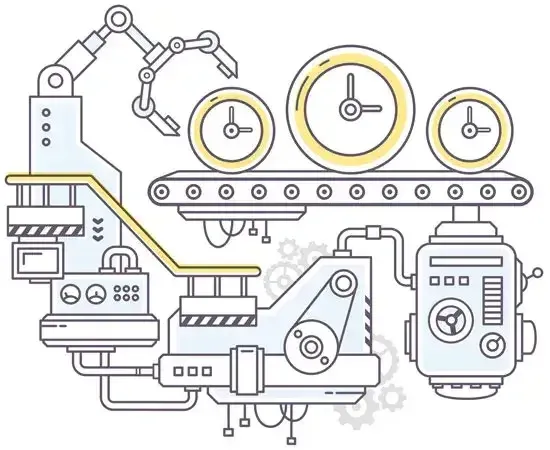
Without an accurate picture of timing, it is hard to make informed decisions about performance after a change, and easy to land on poor ones that create delays or inefficiencies. The answer is to add a tool that captures timing and variability. Process simulation models the process and tests different scenarios to show how each affects timing and the other variables that matter. (For a closer look at where static mapping falls short, see why value-stream mapping alone can slow production and increase costs.) It also helps to involve the people with direct experience of the process, who can explain how timing really plays out. Variability, whether it is the specific time of day a task runs or the natural spread in a repetitive task, is summarized away or ignored in most systems, and that quietly destroys accuracy. Averages do not reliably predict the real flow of work. A simulation accounts for that variability and gives you the most realistic representation of your process.
Communication and stakeholder buy-in
No matter how good your idea is, it will never be used unless you can convince someone else that it will actually work. A lack of buy-in from stakeholders is one of the most common reasons transformation projects fail, because every stakeholder has to be aligned and committed for a project to succeed. Often they are not. Some feel the proposed changes are unnecessary, or even harmful to their interests.
Poor communication leads to misunderstandings, resistance, and a lack of support, all of which undermine the project. Clear, concise messaging that highlights the benefits helps, as does tailoring the message to each audience, since different stakeholders have different priorities and concerns. Involving people from the outset, soliciting their feedback, and giving regular progress updates builds trust and shared ownership.
A digital twin makes that communication concrete. By showing stakeholders exactly how a change will affect their roles, responsibilities, and workloads, you turn an abstract proposal into something they can see. Most processes are complex enough that people cannot picture how an idea will work, so showing them the real problem and how the proposed solution fixes it leaves little room for doubt. The twin both demonstrates the benefits and keeps stakeholders engaged and consulted throughout the project.
Proper planning
Sound planning is essential for any project, and critical for a complex transformation. These projects make significant changes to an organization’s processes, with far-reaching implications. Without careful planning they can quickly become overwhelming, leading to delays, cost overruns, and other issues that ultimately cause failure.
Effective planning requires a thorough understanding of the requirements and implications of the proposed changes, and a digital twin facilitates exactly that. By modeling the proposed changes, you gain a clear view of every requirement and implication, which helps ensure the project is well defined and that the team has the skills and expertise to execute it. Good planning also includes identifying and managing risks, developing contingency plans, and maintaining strong communication so everyone stays aligned on the objectives. When a project lacks clear ownership, the right skills, or proper integration into the organization’s broader strategy, it struggles to deliver its expected value.
Do not suffer the same fate
ProcessModel goes beyond what other methodologies provide. Instead of modeling one part of a system, you can model the entire system and track the effect of any change throughout the whole process. You can watch the flow of your company’s processes without being limited to gathering data in real time. ProcessModel can gather a week of data in seconds, so changes can be made with confidence rather than doubt. It manages the large volumes of information that do not make sense on their own, accounts for the variability that other tools summarize away, and lets you show stakeholders the real problem and the real fix.
ProcessModel is used by thousands of companies around the world to solve real processing problems, with improvement success rates well above the 60% to 70% that trips up most projects. If you have not started on process improvement yet, there is no better time. To see how it works, explore what ProcessModel does or learn simple ways to improve business processes.