
Improvement is a growing priority for business owners and management teams. But simply wanting to improve is not enough. To achieve major changes in an organization’s results, you have to identify the actual processes and address every weakness.
Gary A. Rummler, a founder of the Rummler-Brache Group, developed a robust framework for exactly this. In 1991, Rummler and Allan P. Brache created a model that defines the steps required to run a process improvement and management project.
So, to improve your business, you need to address the critical issues using structured business process modeling. Here are the essential steps.
Recognize the needed improvements
First, identify the key processes that need improvement. You can use a formal or an informal approach. The processes you adopt for improvement should be the ones with the greatest influence over customer requirements and competitive advantage.
Create objectives
Next, decide the objectives of your project according to the requirements of the process. The goal of your objectives should be to gain control over the workflow, so clear metrics are essential.
Define the project team
When selecting members for the project team, choose people who are cross-trained. Cross-trained members raise the standard of the analysis and help maintain persistence for change.
Document with business process modeling
You need a detailed document outlining the levels within your organization. This can start from the process level and drill down to the employee or performance level.
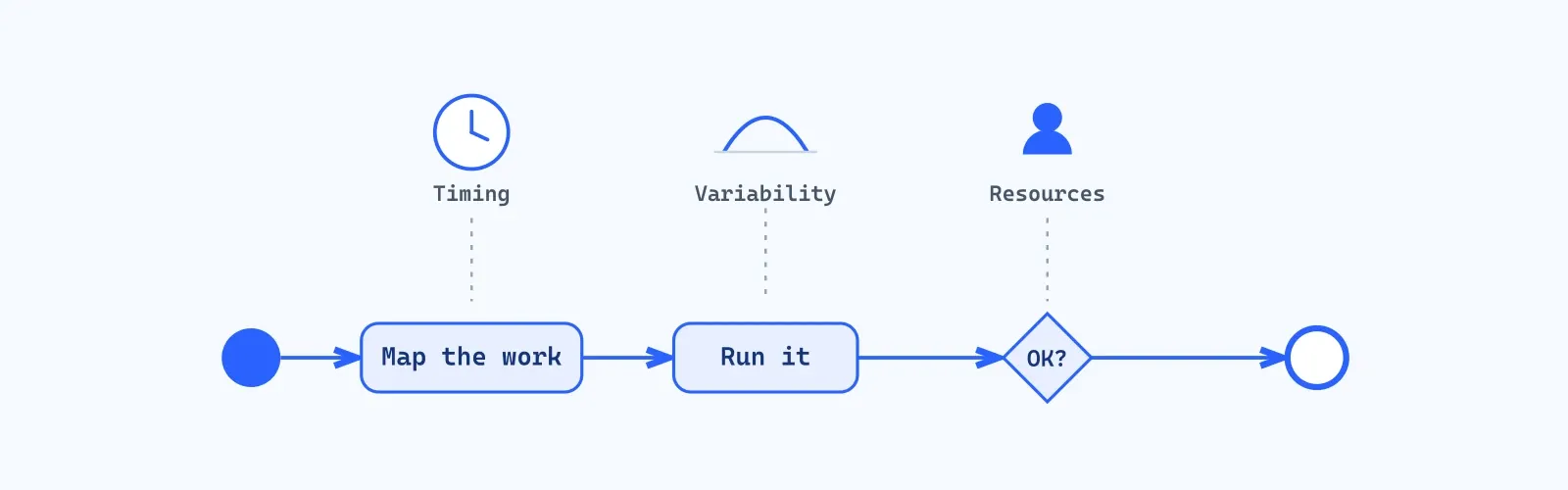
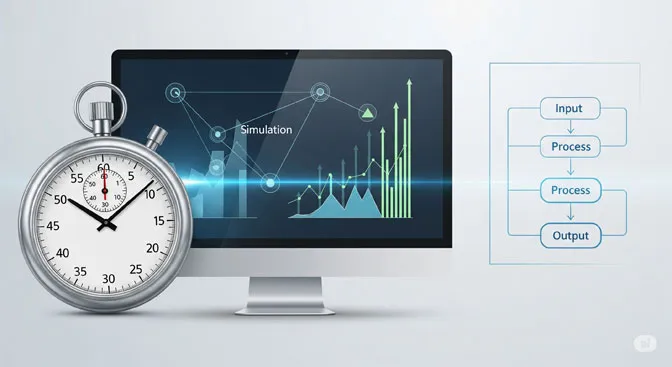
Traditionally, you would create an organizational cross-functional map. But modern business process modeling tools like ProcessModel take this further. They let you create active simulations rather than static maps.
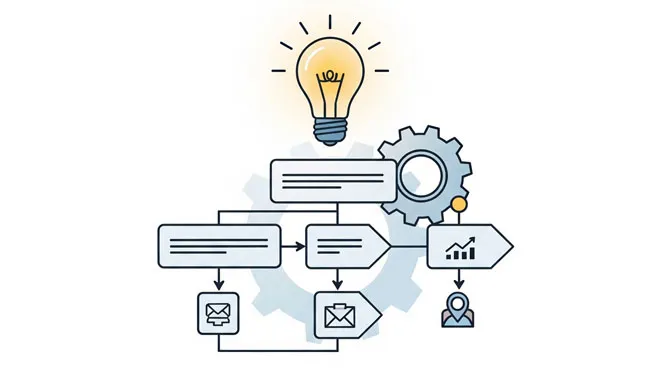
With the latest version of ProcessModel, you can describe a process in plain language to your own AI app and, through PM AI Bridge, it can build the model structure on the canvas for you.
Identify the problem
Now you must identify the disconnections in the process. Disconnections act as hazards to business effectiveness and efficiency. You can categorize the weaknesses into three levels:
-
Process level
-
Employee performance level
-
Organizational level
Develop the answers
Find these disconnections across all three levels. Analyze the problems and prioritize the major issues using your business process modeling data. Then develop the solutions and measure them. You should also establish a cross-functional process for any changes you recommend.
Establish the method
Get the sub-process measure that reflects the objectives of your project. This makes sure your process improvement tools are tracking the right data.
Execute the project
Finally, the last step is simple. After applying all of the implementations, you can execute the project. This improvement process applies to both smaller and complex workflows. Typically, the average time to run the cycle ranges from 3 days to 3 months.