

To win a strong competitive edge in a fast-moving market, you want to take advantage of opportunities as they appear rather than merely reacting to change. That means sharpening your ability to anticipate shifts in revenue and cost, finding ways to lift productivity, and applying methods that bring cost down. Done well, these steps help you see problems coming and prepare a response before they arrive.
Different companies pursue different goals. A single business might hold several objectives at once:
- Produce products or services of high quality.
- Create value in those products or services for shareholders.
- Be an employer that people want to work for.
- Grow its share of the market.
- Adopt practices that are both cost-saving and successful.
- Earn industry-wide recognition for the product or service it offers.

To reach any of these goals, you need a clear understanding of what it takes to produce the product or service you are working on. To grow, you have to recognize the variation in the process you follow when you make that product or service, so that when the time comes to change it, you can tell whether the change actually helped. In short, you want to run your business on correct data for both the products and the processes.
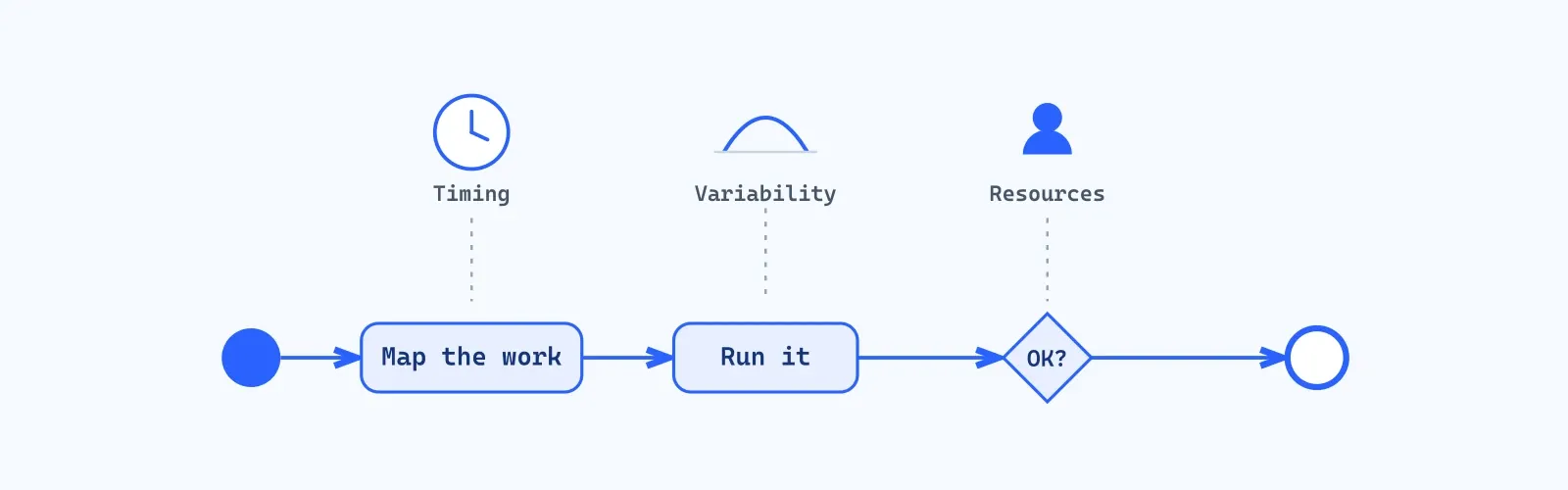
But how do you know your data is good and correct? Can you compare data between two processes or two projects? You need real consistency in the data to make sound comparisons. If you want comparisons that are accurate and meaningful, use process simulation in your process maps and models. With simulation software, your odds of genuine process improvement are far better than they are when you evaluate changes by hand. You want to know the success rate of a change and confirm that it adds value to what you provide, which means having a common way of doing things, a consistent way of mapping processes, and a basic set of guidelines to follow.
Getting to the basics, ask yourself a few questions. Do you know how to map and code a process? Can you and your team apply Six Sigma techniques to remove common problems?
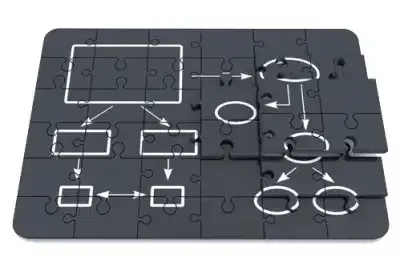
Can you find the best route for a given process? Building common processes that fit your work environment and your business is essential for controlling those processes and improving them.
Without solid control and management skills, you cannot work efficiently enough to spend time on process improvement. Fundamental practices like planning and monitoring have to be recognized and put in place. Managing risk is one of those fundamentals, and so is handling demand in a way that delivers more value to customers, which is a core part of any successful business.
How simulation turns objectives into results
Taking your business to a position of real competitive advantage requires many improvements, made step by step, and this is where process improvement helps most. Process simulation lets you try out several scenarios you think might work without committing real resources or losing money. Modeling software helps you find, document, and standardize processes, improve work efficiency, cut rework, and measure how well the business runs, then use what you learn to manage the business more effectively.
There is, of course, a cost to achieving process improvement. Experienced practitioners know it typically runs between 2% and 15% of the standard process effort to deliver considerable gains. Experience also shows that process improvements bring strong returns on investment and lift the key indicators that matter to the business.
Ready to map and test your own processes? See how ProcessModel works or explore plans and pricing.