
What is SAP?
SAP, short for System Analysis Program Development, is a software behemoth that has dominated the enterprise resource planning (ERP) landscape for decades. It has long been the default for managing everything from finance and human resources to procurement and customer relations.
SAP acts as a central nervous system for complex organizations. It integrates departments, streamlines workflows, and surfaces valuable data. In its heyday it brought order to chaos and lifted efficiency across whole businesses.
But like any dominant force, it has flaws. Its size and complexity can overwhelm smaller companies, leading to painful implementations and hefty price tags. Initial setup is long and arduous, demanding heavy customization and integration with existing systems. The rigidity that gives SAP its stability can also stifle agility, and the one-size-fits-all approach does not always fit the unique needs of a given business. Ongoing maintenance and upgrades add a long-term budget burden on top.
None of that erases SAP’s contributions. It does mean the best ERP is not always the biggest or most comprehensive. Choosing the right tool means weighing your specific needs and where you are headed, and increasingly that points toward solutions built for flexibility, affordability, and continuous optimization rather than a single monolithic platform.
What is process simulation?
Imagine being able to test-drive your business processes before you ever put them into production. A place where you can find bottlenecks, optimize workflows, and predict outcomes inside a safe digital replica. That is the world of process simulation.
The core idea is to replicate the activities, interactions, and variables of a specific process, anything from manufacturing and logistics to healthcare and business operations. You feed in data such as process parameters, resource utilization, and constraints, and the software generates a dynamic model that simulates the flow of work and the effect of each factor on the whole.
Think of building a new factory. It is expensive and slow. But what if you could build a virtual version first, run different operational scenarios, and optimize the layout before turning a single screw? That is the power of simulation. You experiment without the risk and cost of real-world change, and you arrive at a smoother, more efficient, more profitable process.
Why process simulation beats SAP at its own game
Businesses have long leaned on ERP giants like SAP in the pursuit of operational excellence. But a faster, more adaptable, and more cost-effective path has arrived to challenge the traditional ERP throne.
Agility
Where heavyweight ERP features lock you into one way of working, simulation embraces flexibility. You are not confined to a one-size-fits-all template. You build custom models that mirror your operations and capture their specific nuances. That granular detail lets you pinpoint inefficiencies and opportunities with real precision and tailor the solution to fit.
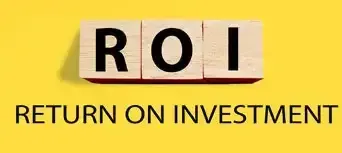
A 2016 study by Aberdeen Group found that organizations using process simulation achieved an average ROI of 300% within six months, while those using traditional BPM tools took an average of 12 months to achieve the same ROI.
Implementation cost
ERP rollouts carry high system costs and ongoing maintenance, and many SAP customers report uncovering hidden costs along the way: migration, IT resources, infrastructure, consulting fees, and more. Process simulation tools like ProcessModel let you drive dramatic change for a fraction of the investment. That lighter financial load is a real advantage for smaller organizations, or any team with limited resources, giving them advanced analytical capability without breaking the bank.
Implementation time, sprint or marathon
Implementing SAP can be a marathon, often running for years before it is fully integrated with your existing systems and workflows. That stretch involves complex configuration tailored to your needs, large-scale data migration with all its inconsistencies and compatibility snags, and the change management of training people on new workflows while daily operations carry on.
Process simulation is a sprint by comparison. You can reach tangible results in weeks, not years, because you build intuitive drag-and-drop models instead of writing configuration, iterate quickly in a virtual environment without disrupting live operations, and integrate with existing systems with minimal migration pain.
Process simulation predicts results. SAP crosses its fingers.
The difference in timelines is real money. A study by Capgemini found that process simulation projects typically pay back in about 6 months, compared with 24 to 36 months for SAP implementations. That is months, potentially years, of time and resources you could reinvest in innovation and growth.
Experiments without fear
Running experiments inside SAP is costly, from direct expenses like IT resources and licenses to indirect costs like business disruption and training. Customization and integration demands inflate the budget fast, making experimentation inherently resource-intensive.
Simulation flips that. You test scenarios and configurations in a safe virtual environment, predict outcomes, spot bottlenecks, and make informed decisions before committing a dollar. It is a crystal ball for your operations, guiding you toward the most efficient path forward.
Workflows and customer experience
Process models are built with dynamic rules and logic, so they adapt to real-time change and unforeseen circumstances rather than following the static workflows of a traditional ERP. That adaptability keeps your processes relevant as your business evolves and conditions shift.
Simulation also gives you a detailed, dynamic view of customer-centric processes. Where an ERP offers a generalized picture of operations, simulation lets you model and optimize specific customer journeys, run scenario tests, and improve the experience in a focused, cost-effective way.
From friction to frictionless, with process simulation.
A 2019 article by Forbes cited data from Celonis, a process mining and simulation company, suggesting that process simulation can reduce cycle times by 30 to 50%, leading to quicker ROI and cost savings.
Ultimately, simulation is about more than cost and time savings. It builds a culture of continuous improvement, constant experimentation, and optimization, the kind of agility that keeps you ahead of the curve.
So while SAP still offers value, process simulation is a compelling alternative. Its flexibility, affordability, speed, and adaptability make it the right tool for teams looking to break free of traditional ERP limits and embrace continuous optimization. Tools like ProcessModel deliver precise insight into and optimization of specific processes without the extensive investment and timelines of a full ERP program. When you are ready to compare the cost yourself, look at plans and pricing.