

The problem
Where the time was going
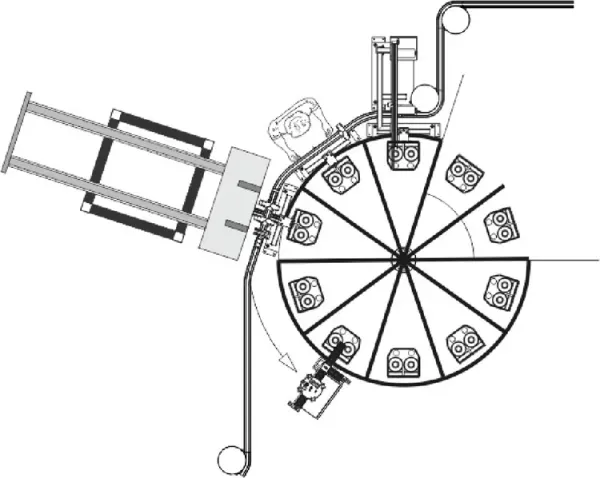
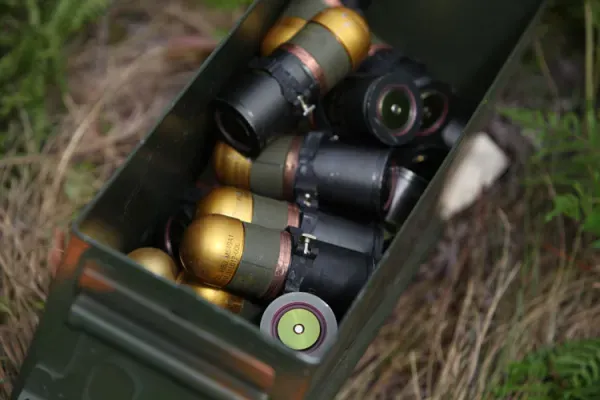
American Ordnance produces ordnance that keeps the US military supplied on the battlefield, including the M430 40mm grenade. The grenade is assembled on an indexing table, and the table will not advance until every station on it has finished its work.
That rule made throughput hard to predict. Each station took a different amount of time, and the slowest one kept shifting from cycle to cycle with human factors, misfeeds, and errors. Because the table moved only as fast as whichever station happened to be slowest, output could not be calculated with any real confidence.
Rising demand pushed the team toward a fix: a double index that would complete final assembly at two stations at once, which they expected to roughly double throughput. It was a sizable capital commitment, and there was no way to know in advance whether it would actually deliver.
What we modeled
Mapping the process, then testing the fix
A lean-manufacturing expert recommended simulating the line before spending anything on the proposal. ProcessModel mapped the full 10-station indexing line, where each station rotates 36 degrees about every 12 seconds, and built it with the variables that really drive the floor: parts unavailability, non-continuous flow, start-up and shutdown, breaks and lunches, and reject rates.
The team built an as-is model first and validated it against the real line. It behaved almost identically to the actual system, which earned the trust needed to test changes on it. From that baseline they ran what-if scenarios, including the double index, and watched the outcomes play out before committing to anything.
ProcessModel was a game changer for us. It allowed us to explore various 'what if' scenarios and see the outcomes without actually implementing them in real life.
The result
The proof, and the payoff
The as-is model was built in just two days and matched the real line, and each scenario ran in seconds rather than weeks of trial on the floor. The proposed double-indexing change was shown not to deliver the expected gain, so the investment of more than $50,000 was avoided before any money was committed.
The study also surfaced time losses that had nothing to do with equipment performance, the kind of thing that is invisible in a spreadsheet. Seeing the scenarios animated made it straightforward to win management agreement on the combination of smaller changes that actually moved the needle.
Part of our work in military and defense.