

The problem
Where the time was going
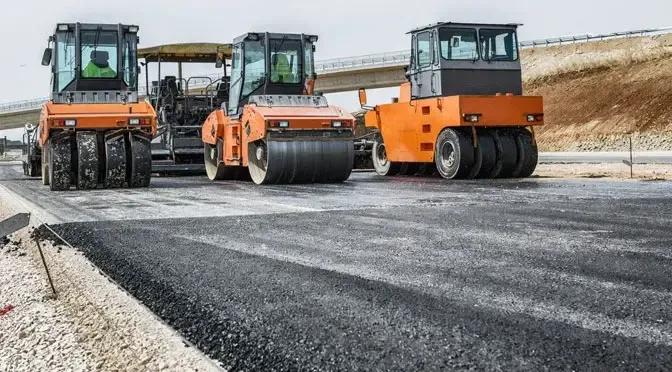
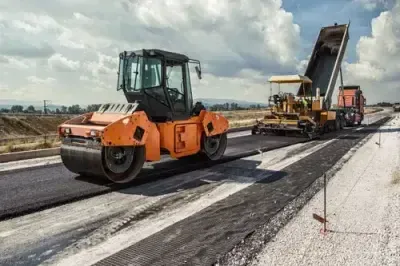
This manufacturer has spent more than three decades building heavy road-construction equipment, from trimming and paving machines to hot-mix asphalt plants, truck scales, computer controls, and soil-stabilization gear sold around the world. The machines are large: 45 to 60 feet long and 50,000 to 100,000 pounds each.
Explosive growth had overloaded the paint facility, the one step every machine had to pass through. Leadership faced a stark choice and needed hard data to make it. They could commit to a $40.5 million expansion and build a second paint facility, or find a way to move more work through the space they already had. Engineering and operations needed proof either way.
What we modeled
Mapping the process, then testing the fix
ProcessModel modeled the complete paint-facility operation. The team flowcharted all 18 process steps, each with its own resource demands and processing times, and modeled roughly 120 distinct pieces of equipment along with the variations of their base configurations.
The model was tied to real records from the company so it reflected what the floor actually did, not an idealized version of it. From that validated baseline, the team reallocated resources and tested each change with animation, watching throughput respond before anything moved on the real line. Resource-versus-output curves showed exactly how staffing levels translated into capacity.
It helped show us in detail the money we would save. It is very visual so there is no misunderstanding of the process, and it allowed us to see where bottlenecks existed.
The result
The proof, and the payoff
Added manpower together with smarter resource allocation and a few process changes raised throughput enough to meet the schedule without the new building. The $40.5 million capital investment was avoided.
Just as valuable, the decision was backed by a model the whole team could see and agree on. The visual simulation pointed straight at the processes that needed detailed analysis, and the output curves turned a staffing debate into a question the data could answer.
Part of our work in logistics.