

The problem
Where the time was going
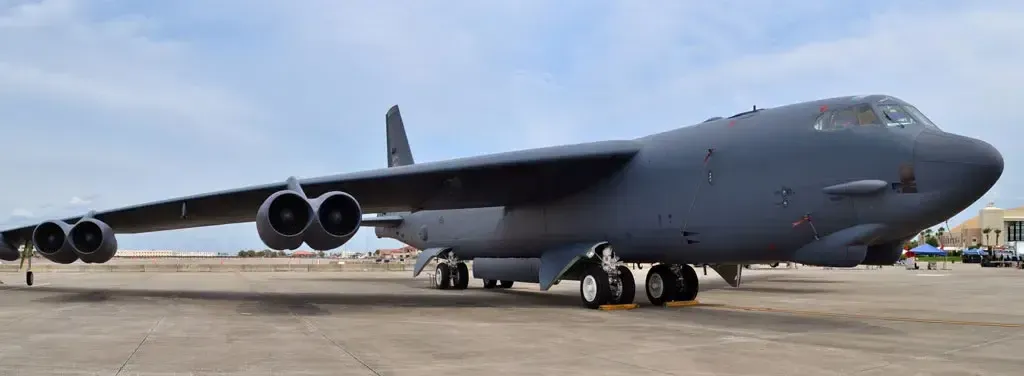
For half a century this base has been central to US defense, serving both as a primary operating location for bombers and as a critical refueling hub for transport aircraft. Its fuel transport system was modern, but the hydrants that actually fueled aircraft had deteriorated, and a major reconstruction was set to replace and add hydrants in phases.
The catch was that each phase disabled large parts of the hydrant system. The base ran on 57 hydrants split across the north and south ramps, 20 of them already out of service. Phase one would pull 20 active hydrants from the south ramp, leaving just 4 there and 22 on the north, roughly half the original capacity.
With hydrants cut in half, a large bomber operation moving in tandem with an intense airlift could create a queue that stalled the whole ramp. A waiting aircraft would have to taxi to an empty stub, shut down, and sit idle until a space opened, then restart, taxi again, and shut down once more. Every taxi burns about 4,000 pounds of fuel and takes 30 to 60 minutes, before counting the wait.
What we modeled
Mapping the process, then testing the fix
The hydrant system is the most efficient way to fuel, so the goal was to use the hydrants fully before falling back on trucks and temporary fuel bladders. Service time was not fixed either; it depended on each aircraft's fuel load and on how many others were fueling at the same time, a variability the model could represent directly.
The planning team built four alternative plans, and ProcessModel let them test each one against the same demand before touching the ramp. Plan I sent all bombers and tankers to the north hydrants, but every aircraft then needed a taxi and all resources ran at 90 percent, overwhelming the taxi crews. Plan II used the hydrant stubs for full-service parking and pushed the overflow onto trucks, which the safety office rejected for parking live aircraft beside live aircraft. Plan III routed shorter-cycle tankers to the north load stubs and bombers to bladders and trucks, which produced excessive cycle times and overloaded the alternates.
Plan IV split the hydrants between north load stubs and north hydrants, sending tankers to the stubs and bombers to the hydrants, and letting tankers spill over to the hydrants and alternates once the stubs filled. That balanced utilization across every refueling process, with only brief, temporary queues at the fuel-truck step.

With ProcessModel, we have more information than we ever had before. Process simulation takes us out of the realm of speculation and closer to the world of prediction.
The result
The proof, and the payoff
The team kept optimizing Plan IV, tuning the mix of load stubs and hydrants and varying the number of taxi crews. The simulation proved the operation could be supported with just two taxi crews, and that the system could absorb far more demand than anyone had expected.
The end result was a refueling process that increased throughput even while half the hydrants were inoperative. With the base facing four more construction phases, the validated model carried forward as the tool to plan each of them, turning a one-time study into a reusable decision aid.
- Plan IV
- balanced utilization across every refueling process
- 2 taxi crews
- enough to support the full operation
- 4 more phases
- planned with the same reusable model
Part of our work in military and defense.