
Weekly, Monthly, Quarterly and Yearly Arrivals
LegacyHow this worked in the previous version
When you need to have a random arrival pattern that repeats over the time period of a week, month, quarterly or yearly.
Where to Find the Model Object
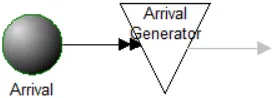
Section titled “Where to Find the Model Object”The following model object will be used:
- Arrivals - Weekly OR Monthly OR Quarterly OR Yearly.
How to Use the Model Object
Section titled “How to Use the Model Object”-
Open Your Model: Open your model or create a new blank model.
-
Insert the Model Object into Your Model: Locate the appropriate location in your model where you would like to place the model object, move the view to the location and then insert the model object.
-
Connect to Your Model
-
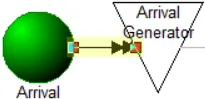
Connect the left end of the arrival route to your Entity.
- Create a route leaving Arrival Generator going to the first process in your model.
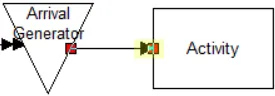
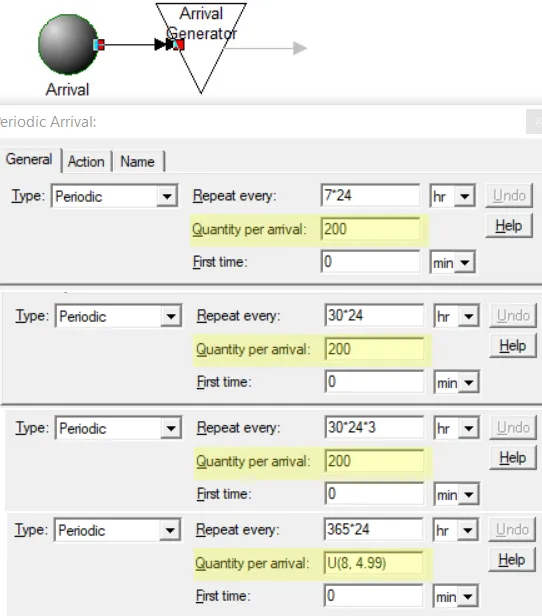
- Change the Quantity on the arrival route to the number of entities you process in one week, month, quarter or year, based on the model object selected.
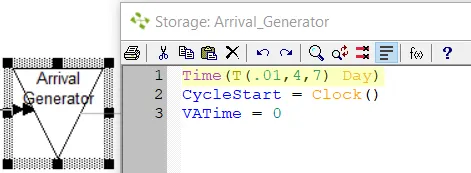
- Change the distribution in the action logic of Arrival Generator to your distribution pattern for the week, month, quarter or year, based on the model object selected.
Weekly: 200 entities arrive every week (7 * 24 hrs). This must be changed match your arrival conditions. Monthly: 200 entities arrive every month (2430 hrs). This must be changed match your arrival conditions. Quarterly: 200 entities arrive every quarter (three months or 24303 hrs). This must be changed match your arrival conditions. Yearly: Between 3 and 12 entities arrive every year or 24365 hrs). This must be changed match your arrival conditions.
In Arrival Generator a random time value is assigned to each entity. After that waiting time, the starting cycle time and value added time attributes are set to 0 so that when the entity leaves the storage location, it will be as though the entity just arrived in the model.
- Completion: The model object is now integrated into your model, you should now be able to save and then simulate the model.